Tag: New York

  • Poison Plot Slayings: The Dark Psychology Behind a New York Mother and Grandmother’s Fatal ‘Folie à Deux’

    Poison Plot Slayings: The Dark Psychology Behind a New York Mother and Grandmother’s Fatal ‘Folie à Deux’


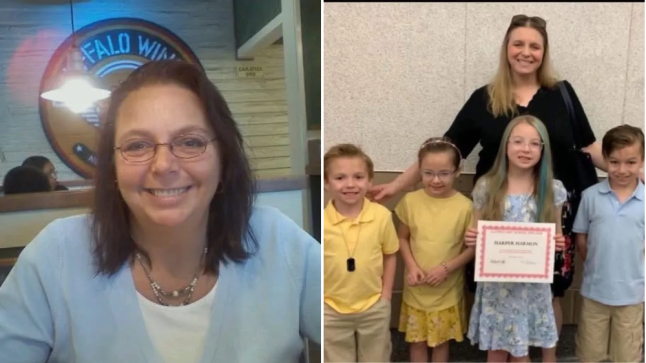
    A side-by-side composite photo. On the right, Sarah Myers smiles alongside her four children: Harper, Hudson, Gavin, and Gracelynn. On the left, grandmother Amy Steadman poses for a portrait. Both images are sourced from family social media accounts.
    From left to right: Grandmother Amy Steadman, and Sarah Myers with her children. Legal authorities confirmed the family members’ identities following the tragic incident in Mechanicville, N.Y. | Photo: Social Media

    Bombshell forensic files released by New York State Police investigators have exposed the disturbing mechanics of a coordinated family annihilation. Official reports confirm a mother and grandmother conspired through covert text messages to systematically poison four children inside their Mechanicville, NY apartment to evade a bitter legal tracking battle.
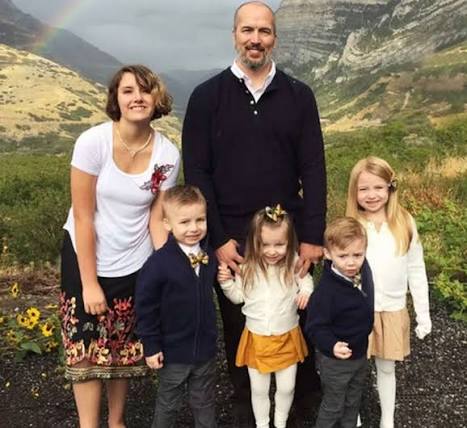

    A family photo showing the father Brady Harmon smiling alongside his four children, Harper, Hudson, Gavin, and Gracelynn, in an outdoor setting.
    The four children—Harper, Hudson, Gavin, and Gracelynn—pictured with their father Brady Harmon in Mechanicville, N.Y. | Photo: Social Media

    The Real-World ‘Folie à Deux’ Delusion

    Pop culture fans heavily recognize the phrase from the Joker: Folie à Deux film, where the term literally translates from French to mean the “madness of two.” In clinical psychiatric profiling, it defines an incredibly rare and terrifying shared psychosis where two deeply isolated individuals systematically fuel and absorb each other’s severe mental delusions.

    While fiction explores this as a cinematic concept, New York investigators are now revealing the real-world horror of the phenomenon. In the case of Sarah Myers and Amy Steadman, this shared madness completely warped the maternal instinct—transforming a mother and a grandmother into a coordinated, calculating unit that used a dark poison blueprint to escape reality. 

    • The Toxic Breakdown: Post-mortem analysis revealed 13-year-old Harper, 11-year-old Hudson, and 10-year-old twins Gavin and Gracelynn were administered massive, lethal combinations of over-the-counter sleep medications and prescriptions inside the apartment. 
    • The Text Message Blueprint: Mechanicville Police Chief William Rabbitt confirmed that Sarah Meyers, 44, and her mother Amy Steedman, 64, planned the execution layout weeks in advance. In horrific real-time text logs exchanged while the children were actively dying, Meyers messaged her mother: “It’s not working we need another option.” 
    • The Fatal Struggle: The timeline turned violent when 10-year-old Gavin realized what was happening and attempted to defend himself. Forensic tracking indicates either the mother or grandmother utilized a knife to fatally assault the child during the struggle. 
    • The Custody Clock: The final forensic timeline reveals the conspiracy culminated just days before the children were legally ordered to be reunited with their father in Utah for a two-month summer visitation, ending a multi-year litigation deadlock. 
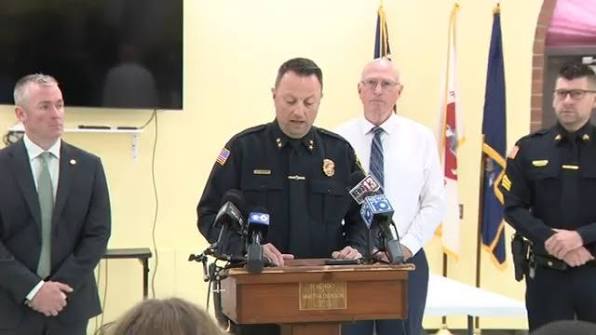
    Mechanicville Police Chief William Rabbitt speaks from a podium during an official law enforcement press conference. He is wearing his uniform, standing in front of microphones with official seals in the background.
    Mechanicville Police Chief William Rabbitt addresses reporters during a joint press conference regarding the multi-agency investigation. | Photo: Facebook

    A Producer’s Perspective: Exposing the Shared Delusion

    “When you see a mother and a grandmother unite to systematically destroy an entire generation of their own family, you are looking at a complete psychological collapse of the maternal instinct,” notes the Executive Producer of 15 Minutes of Murder. “The fact that they used clinical planning—hiding behind handwritten rationalizations of ‘protection’—proves just how deeply an undiagnosed mental health crisis can warp a human mind.” 

    The producer notes that the rising visibility of these cases requires an independent investigative lens:

    “From the Lindsay Clancy trial to the Corie Walsh tragedy in Illinois, and now this toxicological case in New York, the public is starting to ask a terrifying question: What is going on!?  With these overlapping headlines dominating our feeds right now, it is easy to view this sudden wave of violence as a modern phenomenon.” says the Producer. Yet, criminologists and historians emphasize that these heartbreaking breaks from reality are not new; they have quietly existed as a tragic constant of the human condition. “These horrific clusters prove that severe, undiagnosed mental health imbalances do not exist in a vacuum. When domestic fighting and isolation take over a household, stable reality can completely fracture. True justice means we stop looking at these files as isolated local incidents, center the memory of innocent children like the Harmon siblings, and expose the psychological warning signs before the loop repeats.”


    Share Your Thoughts: Do you believe family court systems require mandatory mental health evaluations for all parties during high-conflict custody disputes to prevent domestic escalation, or is that a system overreach? Let us know in the comments below.


    Go Deeper: Check out our Ask a PI series on our video tab or launch our YouTube Channel for deep-dive criminal defense insights from our team.

  • Waterway Slayings: The Urban ‘No Man’s Land’ Hiding America’s Darkest Mysteries

    Waterway Slayings: The Urban ‘No Man’s Land’ Hiding America’s Darkest Mysteries

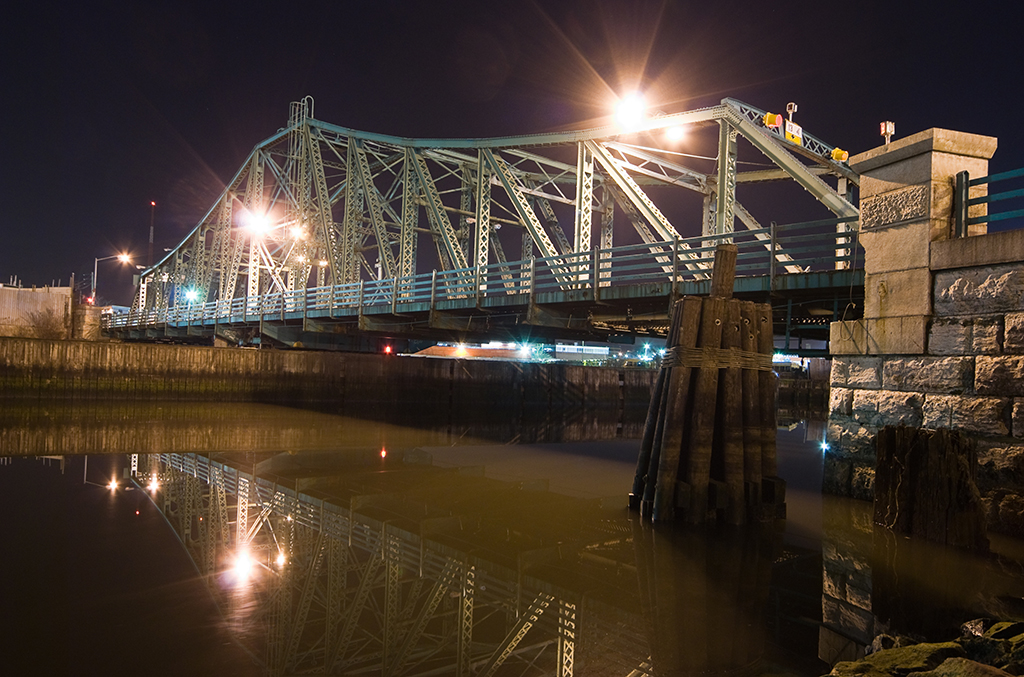
    A dark, atmospheric night view of the industrial Grand Street swing bridge crossing Newtown Creek between Brooklyn and Queens, with city lights reflecting faintly on the dark water.
    The Grand Street Bridge crossing Newtown Creek under the cover of darkness. (Photo: BridgesNYC)

    The haunting recovery of multiple bodies from urban waterways in New York and Houston has ignited intense national concern over the past few years. While law enforcement authorities push back against viral “serial killer” theories, independent investigators are focusing on the dangerous, industrial geography where nightlife hubs intersect with deep water. Cities like Houston and Brooklyn are just two of the major cities where waterways like these hide secrets beneath the surface. They represent a systemic reality: countless cities across the globe are built alongside dark waterways that offer easy concealment for crime.


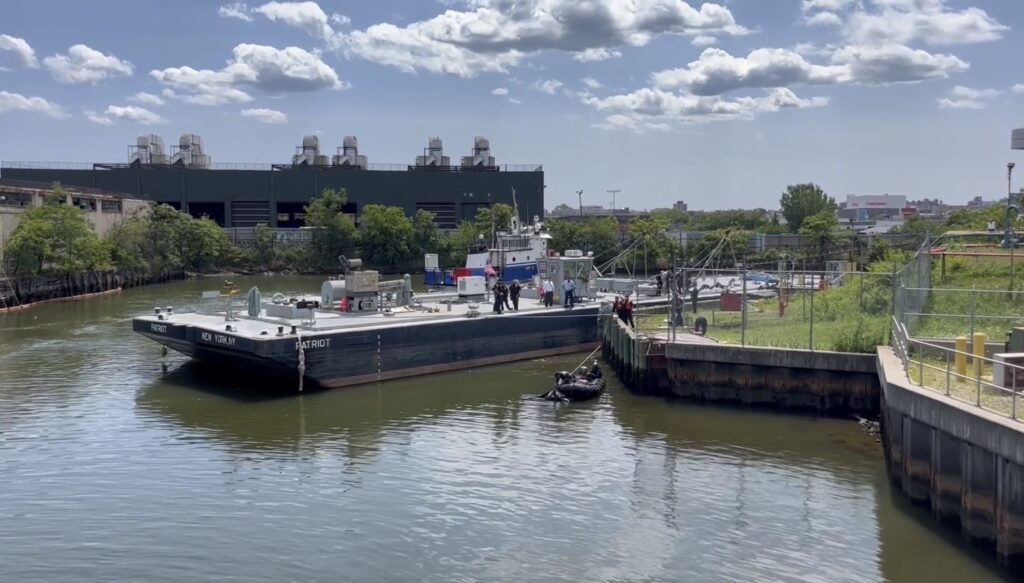
    An NYPD harbor unit boat on Newtown Creek during the day, with officers actively recovering a body from the waterway.
    NYPD Harbor Unit officers recover a body from Newtown Creek. (Photo: Video still by Gregory P. Mango)

    • Why It Matters: Water is a forensic nightmare. It systematically dilutes toxicology evidence, destroys clothing fibers, and erases DNA, making it a predator’s ultimate tool for concealing a violent crime.
    • The Newtown Creek Danger Zone: The industrial border between Brooklyn and Queens—once considered a total geographic “no man’s land”—is now home to massive music venues. Since 2023, multiple men have vanished after leaving nearby clubs, only for their bodies to be recovered from the polluted Newtown Creek.
    • The Houston Bayou Crisis: In Texas, Houston’s extensive waterway network has turned into a massive tracking file. Hundreds of bodies have been pulled from the city’s bayous over the last decade, sparking fierce public demand for municipal transparency.
    • The Institutional Denial: In both New York and Houston, city officials and police departments vehemently reject any connection between the cases, frequently attributing the drownings to substance impairment, accidental falls, or transient conditions.

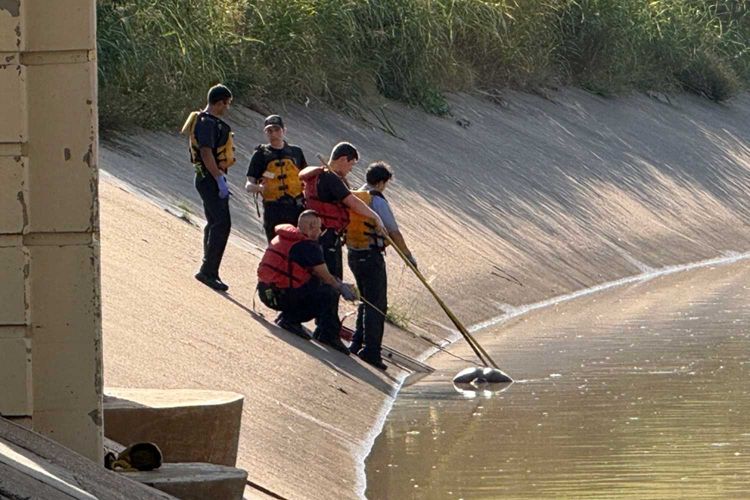
    Emergency emergency personnel, including Houston fire and police units, gather near a bike path during the day along the water at White Oak Bayou to conduct recovery operations.
    First responders search in the water at White Oak Bayou, Oct. 8, 2025.Credit : Jill Karnicki/Houston Chronicle via Getty

    A Producer’s Perspective: Turning Data into Human Reality

    “Facts and statistics are crucial, but the data doesn’t truly become real until you look at the human devastation left behind,” notes the Executive Producer Craig of 15 Minutes of Murder. “When you watch an interview with a grieving family member whose cousin was pulled from a Houston bayou, and you hear that the autopsy was ruled ‘undetermined,’ the clinical case file shatters. You realize that beneath the paperwork is a family left in absolute torment, deeply suspecting foul play while the system closes the book.”

    The producer’s own history living in New York provides a chilling context to the environmental vulnerabilities of modern nightlife:

    “I remember distinctly the feeling of leaving a warehouse venue out near Newtown Creek at 3:00 AM in the dead of winter. It was an absolute no-man’s land—remote, freezing cold, snow on the ground,and completely quiet. If you screamed, no one would ever hear you. There was nothing open, no traffic, and the walk to the nearest subway line felt miles away. I used to be terrified of the Gowanus Canal, but at least that area has built up over time; there is life around you 24/7, even if it’s just a corner bodega. But these active industrial waterways adjacent to nightlife districts are a completely different level of isolation, and it is an environment easily exploited by a predator.”


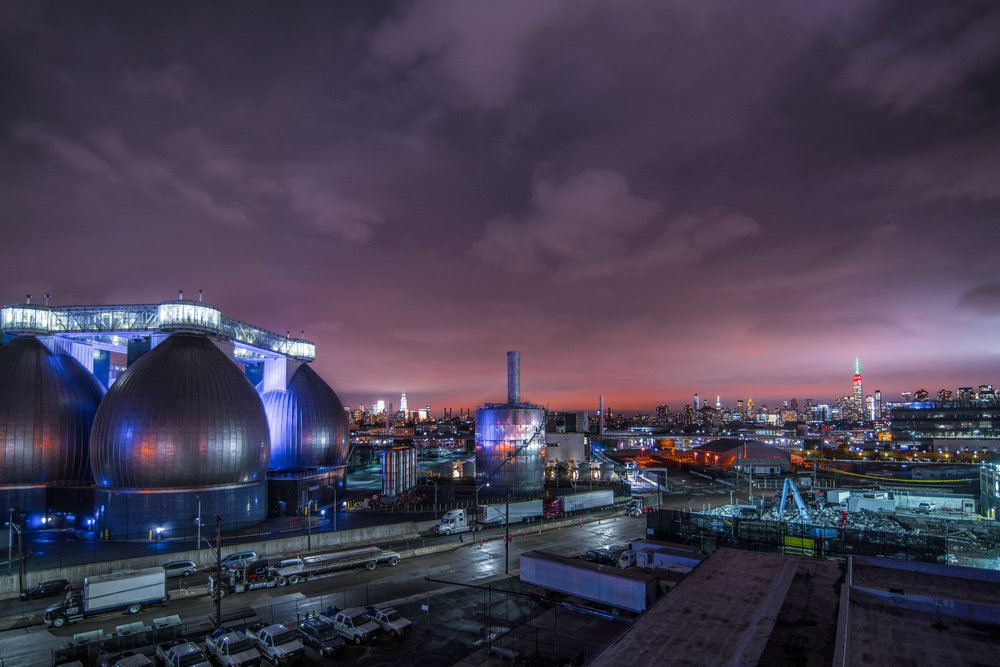
    A stark night view of a completely empty, industrial street leading toward the Newtown Creek wastewater facility, where massive, egg-shaped metallic structures glow with light against the dark sky.
    Silent night in the industrial sector of Newtown Creek. (Photo: Courtesy of the Roosevelt Island Historical Society)

    Share Your Thoughts: Do you believe cities have a legal obligation to install heavy fencing and surveillance cameras around industrial waterways near entertainment districts, or is this simply a matter of personal nightlife safety? Let us know in the comments below.


    Go Deeper: Check out our Ask a PI series on our video tab or launch our YouTube Channel for deep-dive criminal defense insights from our team.

    A daytime view of a concrete storm drain outlet pouring rushing water directly into the wide, muddy channel of Buffalo Bayou with the downtown Houston urban landscape nearby.
    A downtown Houston storm drain empties into Buffalo Bayou, highlighting the direct link between the city streets and its hidden waterways.