Tag: Florida Cold Cases

  • I-4 Highway Corridor Mystery: Why Florida’s Fast Transit Lines Shield Transient Predators

    I-4 Highway Corridor Mystery: Why Florida’s Fast Transit Lines Shield Transient Predators


    A lone semi-truck trailer parked on a dark, isolated asphalt lot at night, illuminated only by a distant, dim street lamp under a pitch-black sky.
    For decades, the pitch-black shoulders of Florida’s highways hid a recurring nightmare. (Photo: Pixabay)

    A chilling reality has been forcing its way to the surface of Central Florida’s transit network. Investigative profiles reveal that the rapid expansion of major interstate corridors has inadvertently created the ultimate hunting grounds for transient predators—turning normal, everyday commuter routes into active jurisdictional black holes.
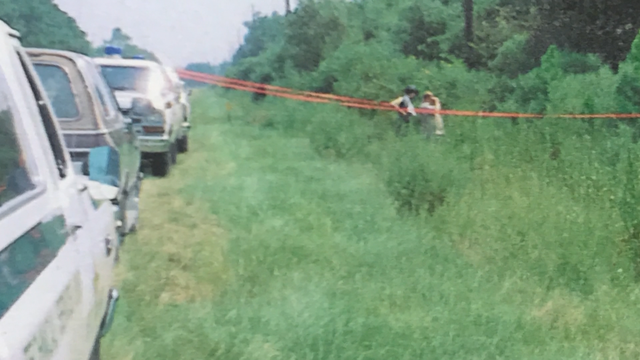

    A crime scene photograph showing a rural road bordered by thick Florida brush, pine trees, and overgrown foliage. Yellow police line tape is strung across the frame, blocking access to the wooded area off the side of the road.
    The wooded roadside in Lake County, Florida, where the remains of Pamela Leigh Walton were discovered in 1988. The isolated, rural terrain closely mirrors the area where Rebecca Sue Hill was found just a few years prior. (Photo courtesy of the Lake County Sheriff’s Office)

    • Why It Matters: Millions of drivers navigate the Interstate 4 network day in and day out, completely blind to its dark investigative history. Between the 1970s and 1990s, at least 19 women vanished or were found dead along this exact concrete artery, baffling multi-county sheriff departments for decades.
    • Hiding in Plain Sight: The terrifying nature of highway serial crime is how normal the environment feels. Predators do not require hidden underground fortresses; they utilize the public nature of truck stops, rest areas, and exit ramps to select targets and vanish in plain sight.
    • The Mobility Factor: Highways and surrounding transit lines provide a transient killer with an exceptional tactical advantage: geographic detachment. A predator can operate in one jurisdiction and dump a victim across a county line within 30 minutes, counting on fragmented local paper records to prevent police from spotting the overlapping patterns.
    • Tracing the Gaps: Because historic highway files frequently involve out-of-state victims who were just traveling through the region, the initial timelines are heavily fractured. When an individual disappears from a transit hub, separating their final steps from the thousands of passing vehicles is one of the steepest mountains an investigative network can climb.

    Dark, eerie empty highway at night in Florida under dim streetlights, setting a true crime atmosphere.
    A Dark empty highway at night in Florida under dim streetlights (Image by StockSnap from Pixabay)

    A Producer’s Perspective: The Psychology of the Asphalt

    “When you analyze the geometry of these historic Florida highways, you realize that the open road provides the ultimate shield for human predators,” notes the Executive Producer of 15 Minutes of Murder. “We treat these highways as a basic, everyday convenience to get to work or go on vacation. But to a calculating predator, an interstate is a high-speed pipeline of total anonymity.”

    The producer notes that breaking these patterns requires a profound shift in true-crime storytelling: “A standard police log only demands clinical metrics and hard biological data—but our core philosophy with our new investigative blocks is to look past the cold ink of the folder to give these 19 forgotten women their humanity back. They weren’t just anonymous data points left on a shoulder; they were real people cut down by a system that shielded their killers. True justice requires us to look directly into that darkness, center the victims, and forcefully expose the psychological profiling and regional warning signs before history is allowed to repeat itself.”


    Go Deeper: For an in-depth, atmospheric exploration into the hidden forensic history, regional profiling, and cold case tracking files of the Interstate 4 corridor network, review the full studio analysis in the player below.


    Share Your Thoughts: Do you feel that modern interstate transit routes require tighter digital security infrastructures like mandatory automated license plate readers at every exit, or does that infringe too much on public privacy? Let us know your perspective in the comments below.


  • I-4 Corridor Mystery: Elite Forensic Hunt Ties Two ‘Sister Files’ to Long-Haul Trucker Tracker Network

    I-4 Corridor Mystery: Elite Forensic Hunt Ties Two ‘Sister Files’ to Long-Haul Trucker Tracker Network


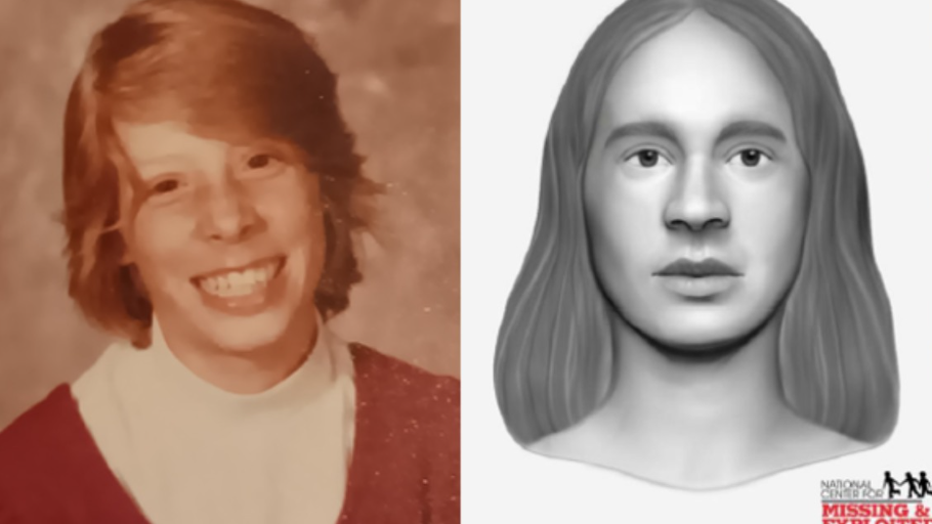
    A side-by-side comparison image. On the left is a vintage school portrait of a young Rebecca Sue Hill smiling. On the right is a forensic composite sketch depicting an age-progressed version of how she might have looked as an older adult.
    The childhood school portrait of Rebecca Sue Hill alongside an age-progressed composite sketch. Forensic artists created the image to simulate what she may have looked like in her later years before her identity was confirmed. (Photo courtesy of the Lake County Sheriff’s Office)

    A sharp strategic pivot by Central Florida cold case investigators has narrowed the hunt for an unmapped 1980s serial predator. By isolating two prominent, newly identified “sister files” out of Lake County, detectives are examining a terrifying geographic timeline that strongly suggests both victims fell prey to long-haul transit predators.


    Black and white high school yearbook portrait of a young Pamela Leigh Walton, pictured prior to her transition as a clean-shaven male youth with short, neatly combed dark hair, wearing a dark formal suit jacket and white collared shirt.
    Pamela Leigh Walton high school photo courtesy: Lake County Sheriff’s Office

    • Why It Matters: The Interstate 4 corridor network provided late-70s and 1980s predators with the ultimate weapon: total transit anonymity. Long-haul truck drivers could exploit a highway exit, dump an out-of-state victim across a county boundary, and count on fragmented paper filing systems to evade local tracking networks.
    • The ‘Judy Doe’ Breakthrough: For 40 years, the Lake County Sheriff’s Office carried only two unidentified female homicide files from the 1980s. The first cracked in January 2025 when advanced DNA profiling identified “Judy Doe” as 16-year-old Rebecca Sue Hill, a missing teenager from Arkansas whose body was left discarded in the Altoona brush off a dirt road.
    • The ‘Julie Doe’ Sister File: The second file matched the exact tracking geometry. In March 2025, forensic genealogy restored the true identity of “Julie Doe,” revealing her as 25-year-old Pamela Leigh Walton of Kentucky. Her remains were discovered dragged just 30 feet off the shoulder of County Road 474 in Clermont—a major transit connector.
    • The Out-of-State Blueprint: Neither victim had local family ties to Florida. The geographic layout of the body drops—both placed in thick, deep woods directly off major highway transit lines—perfectly mirrors the criminal signature of a commercial trucker operating a mobile crime scene.

    A crime scene photograph showing a rural road bordered by thick Florida brush, pine trees, and overgrown foliage. Yellow police line tape is strung across the frame, blocking access to the wooded area off the side of the road.
    The wooded roadside in Lake County, Florida, where the remains of Pamela Leigh Walton were discovered in 1988. The isolated, rural terrain closely mirrors the area where Rebecca Sue Hill was found just a few years prior. (Photo courtesy of the Lake County Sheriff’s Office)

    A Producer’s Perspective: The Digital Dragnet Closing In

    “When you sit in a post-production studio tracing the geometry of these specific sister files, the long-haul trucking theory becomes impossible to ignore,” notes the Executive Producer of 15 Minutes of Murder. “Rebecca Sue Hill and Pamela Leigh Walton were completely lost in a jurisdictional black hole for over four decades. Predators in that era relied on the fact that local sheriff departments simply didn’t have the integrated digital networks to spot overlapping highway patterns.”

    The producer emphasizes that this dual-profile is the foundation of their upcoming series:

    “A standard police log only demands clinical metrics—but our ultimate goal is to look past the ink to give these victims their real lives back. Rebecca and Pamela were young women with futures, erased by a highway system that shielded their killers. Their files belong to a much larger, chilling pattern of at least 19 other victims who vanished or were found dead along this exact Interstate 4 network between the 1970s and 1990s. True justice requires an independent media lens to forcefully expose the broader regional psychological patterns that allowed these predators to operate in plain sight.”


    Premiere Tracking Alert: To step directly into the forensic files and the deep, haunting history of Florida’s hidden transit predators, join our team the evening of 9/13/2026 or anytime after for the highly anticipated premiere of 15MM presents: After Dark — The Corridor (Part 2), streaming on all major podcast outlets (Spotify, Apple, Amazon, iHeart Radio, and more).


    Share Your Thoughts: Do you believe transit corridors and truck stop networks require stricter surveillance infrastructure to permanently dismantle predator anonymity, or is public privacy more important? Let us know in the comments below.


  • “Pure Evil” Florida Police Officer Officially Tied To 1987 Teen Murder

    “Pure Evil” Florida Police Officer Officially Tied To 1987 Teen Murder


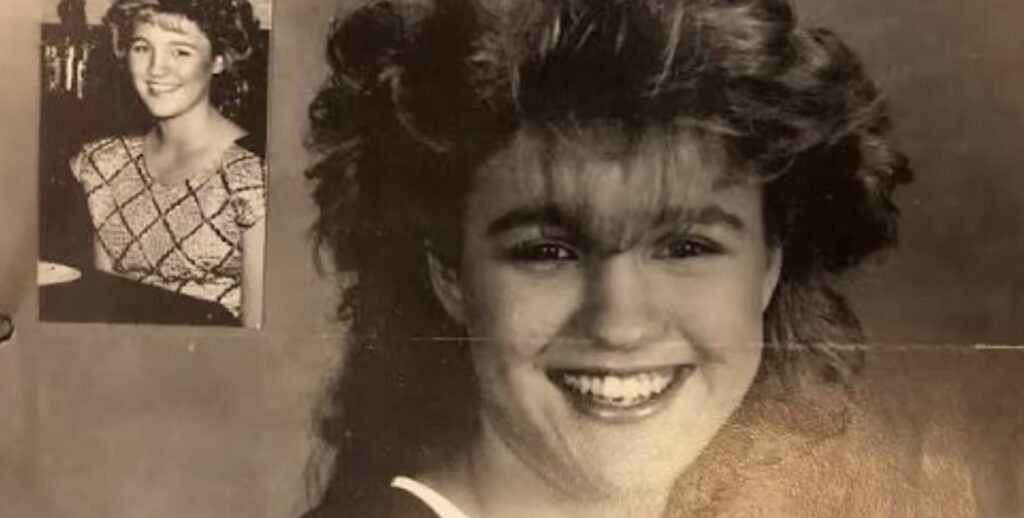
    high school picture of Jeanifer Weldon in B&W with a big smiled and winged 80's hair
    Jeanifer Weldon, 14, who was murdered in 1987. (Photo courtesy of the Polk County Sheriff’s Office)

    LAKELAND, FL — A chilling Central Florida cold case has reached its final resolution without a single strand of DNA evidence. Polk County Sheriff Grady Judd announced that the 1987 abduction and murder of 14-year-old Jeanifer Weldon has been officially closed.

    The perpetrator has been identified as former Mascotte police officer James Duckett, who was executed by lethal injection on July 28, 2026, for a separate, horrifying crime.

    Why It Matters
    The breakthrough exposes a dark reality. Duckett spent decades on death row for the 1987 rape and murder of 11-year-old Teresa McAbee. Because Duckett was already facing execution, Polk County prosecutors historically withheld a second trial to avoid delaying ultimate justice. Following his execution, the Polk County Sheriff’s Office utilized a mountain of circumstantial evidence to “exceptionally clear” the file.


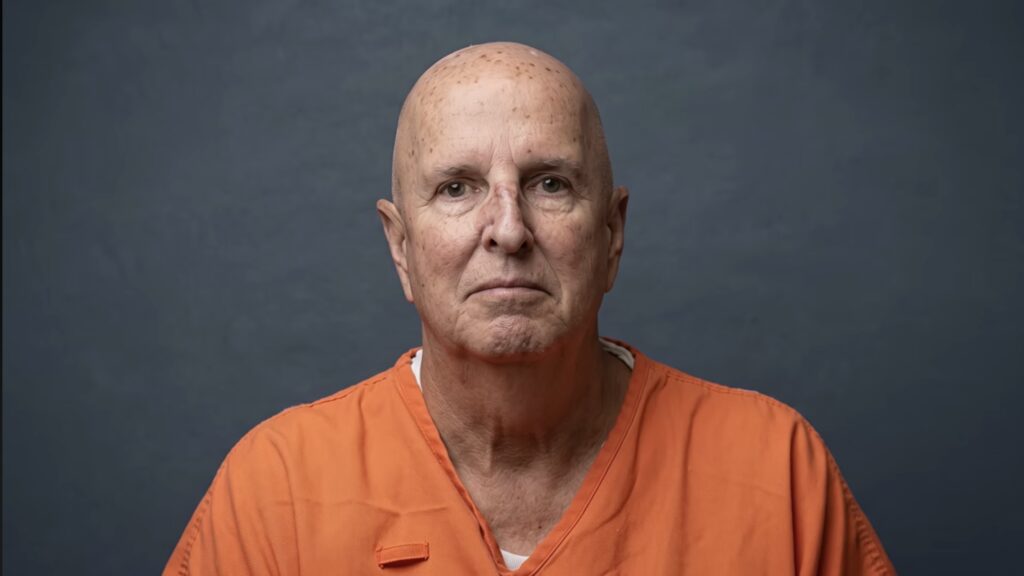
    inmate photo of James Duckett  in orange jumpsuit with a bald headd and emotionless face
    James Duckett booking photo. (Courtesy of the Florida Department of Corrections)

    The Face of “Pure Evil”

    Sheriff Grady Judd did not hold back, labeling the executed former cop as “pure evil in the flesh.” Judd stated that Duckett successfully took his darkest secrets to the grave until relentless police work forced the truth into the light.

    The Evidence Convergence

    Jeanifer Weldon vanished on September 19, 1987, while walking home from a friend’s house in Lakeland. While detectives repeatedly sent Jeanifer’s clothing to modern labs, no usable DNA was ever recovered. Instead, investigators pinned the crime on Duckett through an airtight timeline:

    • The Route: Duckett left for his night shift five hours early. He drove directly past Jeanifer’s walking route and arrived at work late, disheveled, and agitated.
    • The Gift: Hours before her death, Jeanifer bought a distinct stuffed kitten in a green shopping bag. The next morning, Duckett brought home an identical stuffed animal and green bag.
    • The Injuries: Duckett’s own wife later revealed to detectives that he returned home that night with deep scratches on his body.

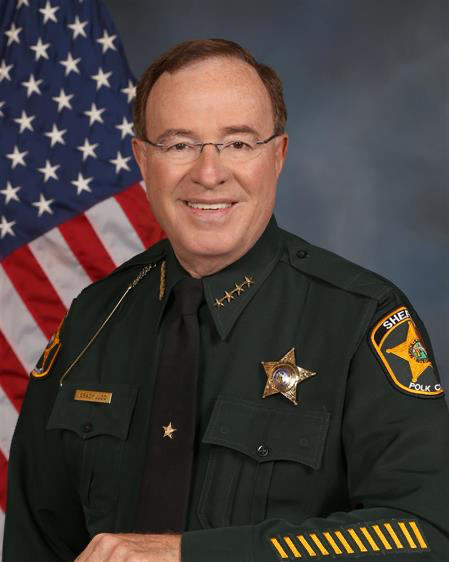
    picture of Sheriff Grady Judd in his green Sheriff's uniform wearing glasses
    Polk County Sheriff Grady Judd gave details of the resolution of the Jeanifer Weldon cold case. (Photo courtesy of the Polk County Sheriff’s Office)

    The DNA Battleground

    While Jeanifer’s case lacked physical forensics, DNA was the explosive focal point of Duckett’s final days. The Florida Supreme Court issued emergency stays of execution in early 2026 to allow advanced testing on a decades-old semen sample found on Teresa McAbee’s clothing.

    Defense lawyers argued the results were entirely inconclusive. The courts ultimately denied further stays after state experts acknowledged the new results could not clear him, ruling the original circumstantial evidence remained ironclad.

    Our PI’s Investigative Take
    “This case highlights exactly why the death penalty remains such a controversial issue,” notes Desiree, the licensed Private Investigator for 15 Minutes of Murder.

    While DNA ultimately played no role in clearing Jeanifer’s case, Desiree emphasizes the high stakes of relying strictly on circumstantial timelines. “Nationwide, more than 200 death row inmates have been entirely exonerated (since the 1973), dozens of them by DNA evidence. When you consider that the U.S. averages roughly 20 executions a year, even a tiny margin of error means an innocent person could face wrongful execution under mistaken incarceration.”

    Share Your Thoughts
    Does an exceptional closure following an execution bring true closure to a grieving family, or did this predator escape the full weight of individual accountability for Jeanifer? Let us know your thoughts in the comments below.


    Go Deeper: Check out our Ask a PI series on our video tab or launch our YouTube Channel for deep-dive criminal defense insights from our team.


  • How One Dynamic DNA Shift Solved a 37-Year Florida Highway Mystery

    How One Dynamic DNA Shift Solved a 37-Year Florida Highway Mystery

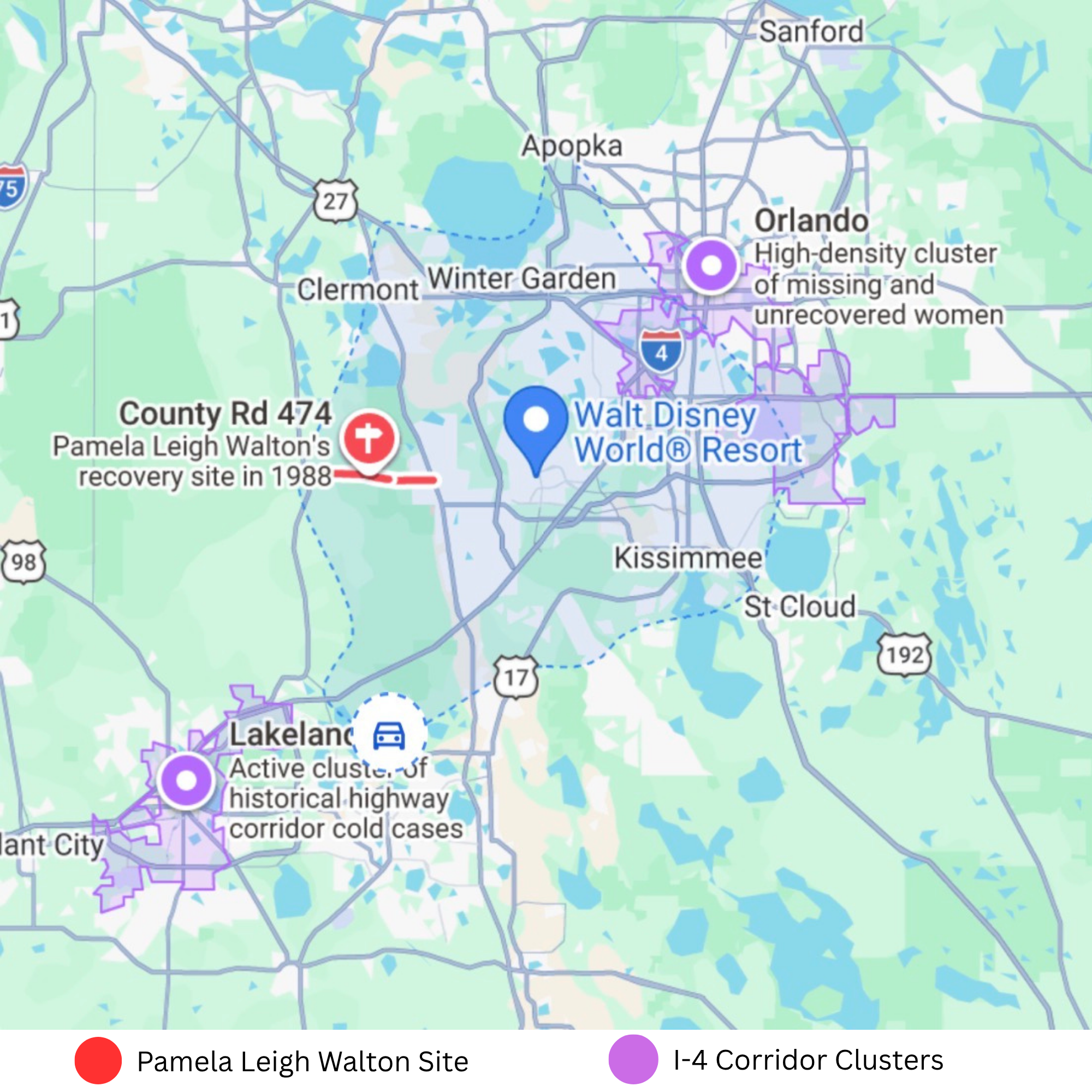
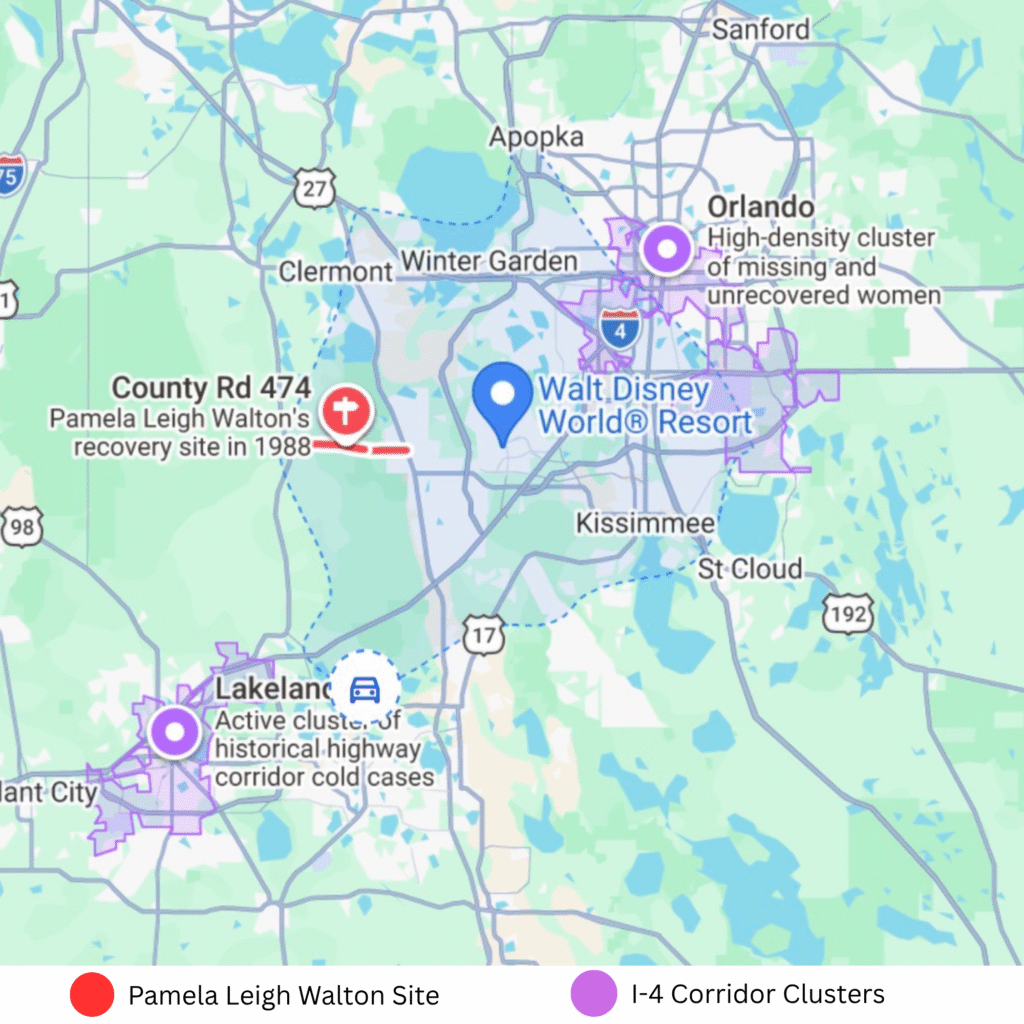
    Geographic map of Central Florida highlighting the Interstate 4 corridor, with colored markers showing the location where Pamela Leigh Walton was found in Lake County relative to known clusters of unsolved homicides and recovered bodies of women along I-4 between Tampa and Daytona Beach.
    Map via Google Maps / Data compiled by 15 Minutes of Murder

    Central Florida – Millions of travelers navigate Interstate 4 in Central Florida every single year, completely unaware of the dark investigative mysteries embedded along the shoulder. For nearly four decades, one of the corridor’s most haunting cold cases involved a homicide victim discovered in the brush off County Road 474 in Clermont, known to local detectives simply as “Julie Doe.” 

    • The Discovery: A citizen searching for firewood stumbled upon hidden human remains in September 1988. 
    • The Breakthrough: A dynamic 2025 genetic breakthrough finally restored her true identity as Pamela Leigh Walton. 
    • The Scale: Pamela’s tragic story belongs to a much larger, chilling pattern of at least 19 other women who vanished or were found dead along this exact highway network. 

    The stark contrast between the vacation destination image of the I-4 corridor and the anonymity of its forgotten victims highlights the darkness hiding in places we pass in our every day lives. 

    The 37-Year Search for Pamela Leigh Walton

    Black and white high school yearbook portrait of a young Pamela Leigh Walton, pictured prior to her transition as a clean-shaven male youth with short, neatly combed dark hair, wearing a dark formal suit jacket and white collared shirt.
    Photo: Lake County Sheriff’s Office

    When Lake County investigators initially processed the 1988 crime scene, a series of early forensic misidentifications sent the homicide case down a decades-long dead end. 

    The timeline to justice required a complete rewriting of the case files: 

    • The Biological Twist: In 2015, advanced genomic sequencing revealed “Julie Doe” was a transgender woman, completely shifting the parameters of active missing persons databases. 
    • The Podcast Connection: The critical break came when a true-crime podcast listener opted into a law enforcement data-sharing box on a consumer DNA profile. This single digital click provided genealogists with the exact matching segment needed to build her family tree.
    • The Return Home: In March 2025, her name was officially restored. Pamela’s remains have since been repatriated from Florida to her native Kentucky. 

    The Shadow of the I-4 Corridor

    While the identification of Pamela Leigh Walton marks a monumental victory for forensic genealogy, the criminal investigation into her death remains wide open. 

    More importantly, independent researchers note that her file is part of a broader, systemic highway anomaly. The I-4 corridor has long served as a high-density hunting ground for opportunistic predators—including long-haul trucker serial killers—who utilize the rapid transit lines and deep anonymity of the open road to evade local police tracking. At least 19 other families are still waiting for the exact same forensic closure that Pamela’s family received. 

    A Producer’s Ethical Blueprint

    As a professional TV producer and the executive creator of 15 Minutes of Murder, I look at these highway tracking files through a structural storytelling lens. 

    “When you sit in a post-production studio analyzing a cold case, you realize your deepest ethical obligation is to strip away the anonymity surrounding these victims,” the 15MM Producer noted. “A highway shouldn’t be allowed to erase a human life. True-crime media has a responsibility to look past the tourist brochures, center the victims, and expose the broader regional patterns that allowed these predators to operate in plain sight. True justice requires a consistent, independent look into the darkness.” 

    Giving Back Their Real Life 

    A digital rendition showing an approximation of how Pamela Leigh Walton may have looked as a transgender woman, featuring shoulder-length styled hair, soft facial features, and subtle makeup.
    Image via pamelaleighwalton.neocities.org (AI Generated via StarryAI)

    While working on a story for 15 Minutes of Murder, our teams first goal is to give a person their real life back. The 15MM Producer notes, “A standard police case file only demands clinical numbers, biological metrics, and hard evidence. But our ultimate goal with After Dark is to look past the ink to give this person their real life back—to remember their closest friends, their favorite songs, their favorite foods, and all the normal, everyday things that truly defined them. When a tragedy like this occurs on the highway, a person gets lost in the darkness first, and then they get lost a second time when they are reduced to just an anonymous folder sitting in a cold filing cabinet.” 


    Tonight at 8:00 PM: 15 Minutes of Murder officially premieres its highly anticipated new series, 15 Minutes of Murder presents After Dark — The Corridor. Put on your headphones, turn the lights down, and join our team as we step directly into the forensic files and the deep haunting history of Florida’s I-4 corridor. Available on all official podcast channels.


    Have Information? The homicide investigation into Pamela Leigh Walton’s death remains wide open. Anyone with tips regarding her time in Central Florida or Kentucky in 1988 is urged to contact the Lake County Sheriff’s Office Cold Case Team at 352-343-9529, or via email at ColdCase@lcso.org. Anonymous tips can also be submitted through Crimeline at 800-423-8477.