A chilling serial killer trial nearly a decade in the making has officially commenced in a Missouri courtroom. Prosecutors began laying out their case against Fredrick Demond Scott, the man accused of stalking and randomly gunning down six victims along a popular public trail network.
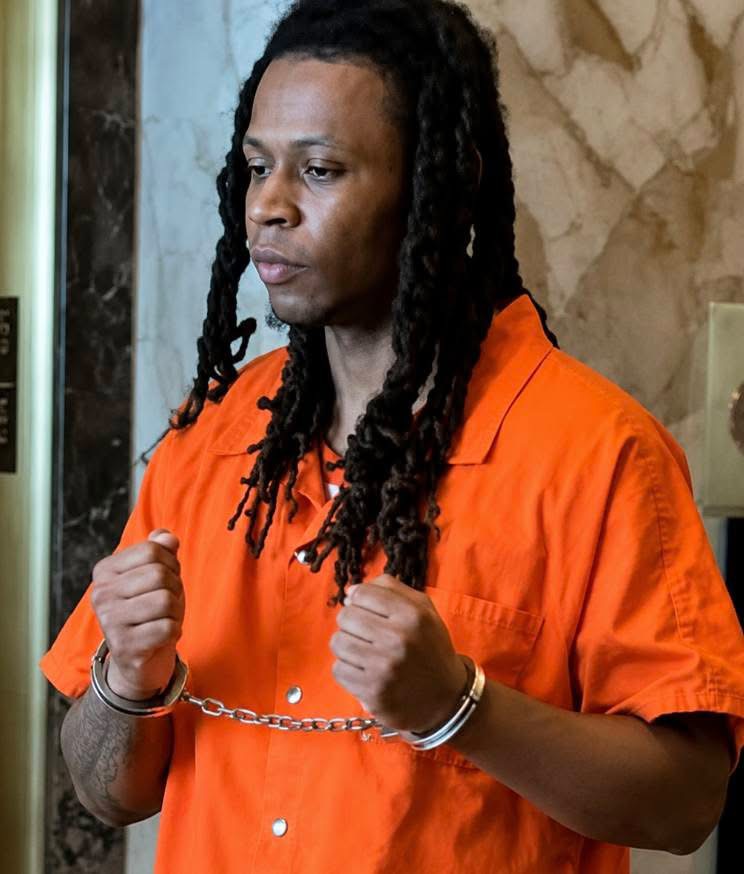
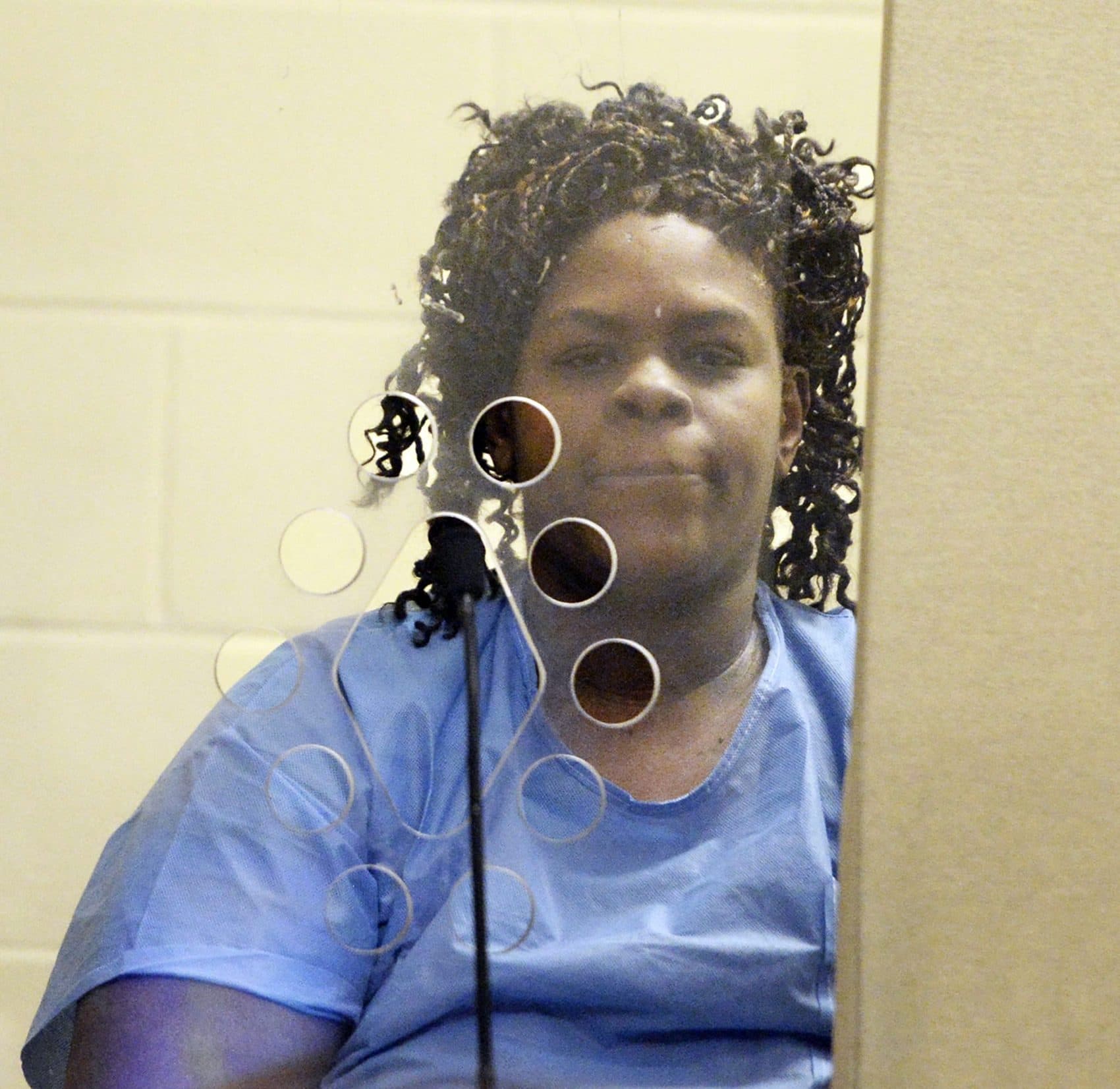
The trial for accused Indian Creek serial killer Fredrick Demond Scott got underway September 3rd, 2026 with opening statements in Jackson County Circuit Court in downtown Kansas City. In this file photo from June 16, 2025, Scott is led away after a competency hearing. Scott has been accused in the killings of Steven Gibbons, 57; John Palmer, 54; David Lenox, 67; Timothy S. Rice, 57; Mike Darby, 61; and Karen Harmeyer, 64. Photo: Robert A. Cronkleton / The Kansas City Star / Pool
Why It Matters: The case has captivated behavior analysts for years due to the completely random nature of the executions. The victims—ranging from dog walkers to morning joggers—were shot from behind without warning, terrorizing local park networks for over a year.
The Confession Tapes: Today’s courtroom centered on bombshell police interrogation audio. Prosecutors played recordings where Scott allegedly admitted to the ambush patterns, mapping his movements directly to the exact dates and trail coordinates where the bodies were discovered.
The Hunting Grounds: Investigators state the suspect utilized the dense foliage and quick exit pathways of the Indian Creek Trail system to stalk his targets, counting on the deep isolation of the wilderness sections to evade urban surveillance networks.
The Behavioral Puzzle
The Profiling Disconnect: Serial predators typically exhibit a distinct victimology or an underlying domestic or financial relationship.
The Anomaly: Scott’s alleged ambush patterns deprived investigators of the traditional relational clues used to build a suspect pool, completely stalling early efforts to link the cases.
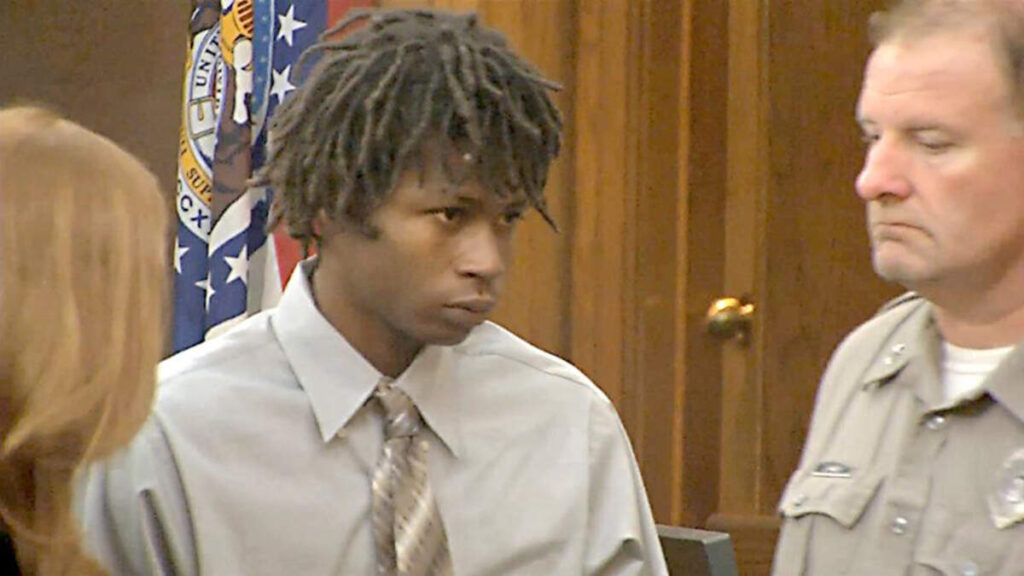
This Sept. 8, 2017, photo shows Frederick Scott in Jackson County Circuit Court in Kansas City, Mo. Pool photo.
15 Minutes of Murder Investigative Take:“A trailside serial predator presents a massive nightmare for local detectives because there is no domestic or financial relationship tying the killer to the victims,” notes Craig, Producer for 15 Minutes of Murder. “When a suspect utilizes wilderness geography, forensic profiling has to shift from standard victimology to tracking the killer’s strict physical comfort zones and geographical habits.”
Share Your Thoughts: Do you believe urban park and trail systems require mandatory surveillance cameras to prevent tracking ground isolation, or does that infringe too much on public privacy? Let us know in the comments below.
Go Deeper: Check out our Ask a PI series on our video tab or launch our YouTube Channel for deep-dive criminal defense insights from our team.
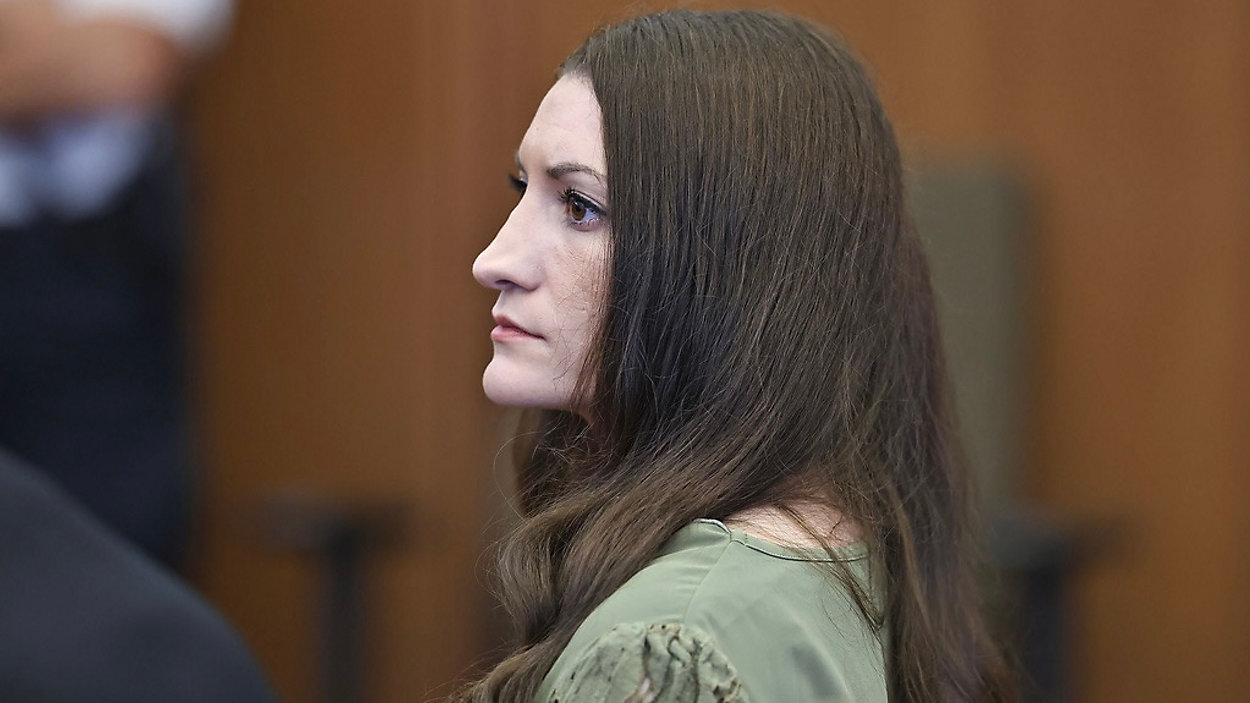
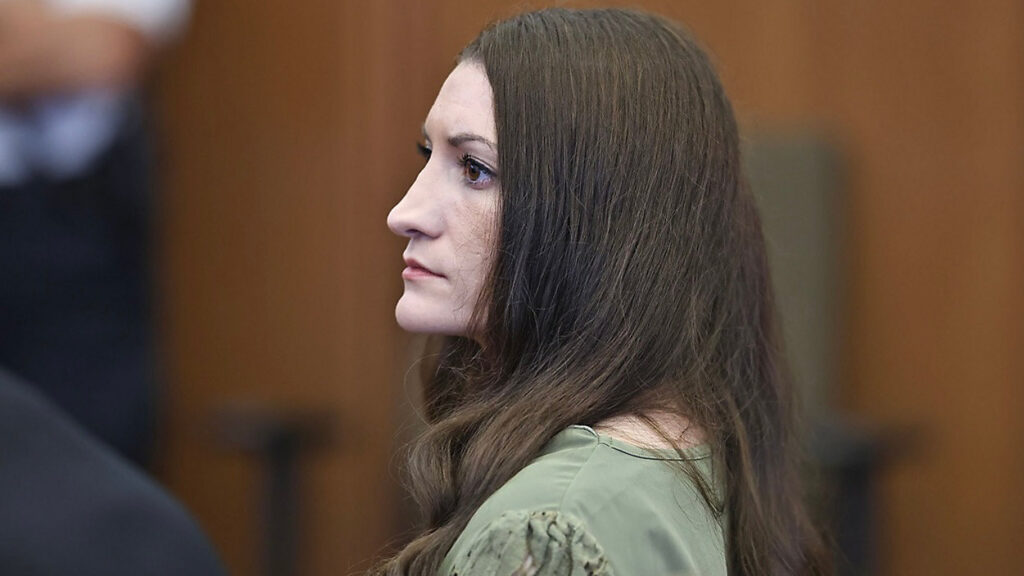
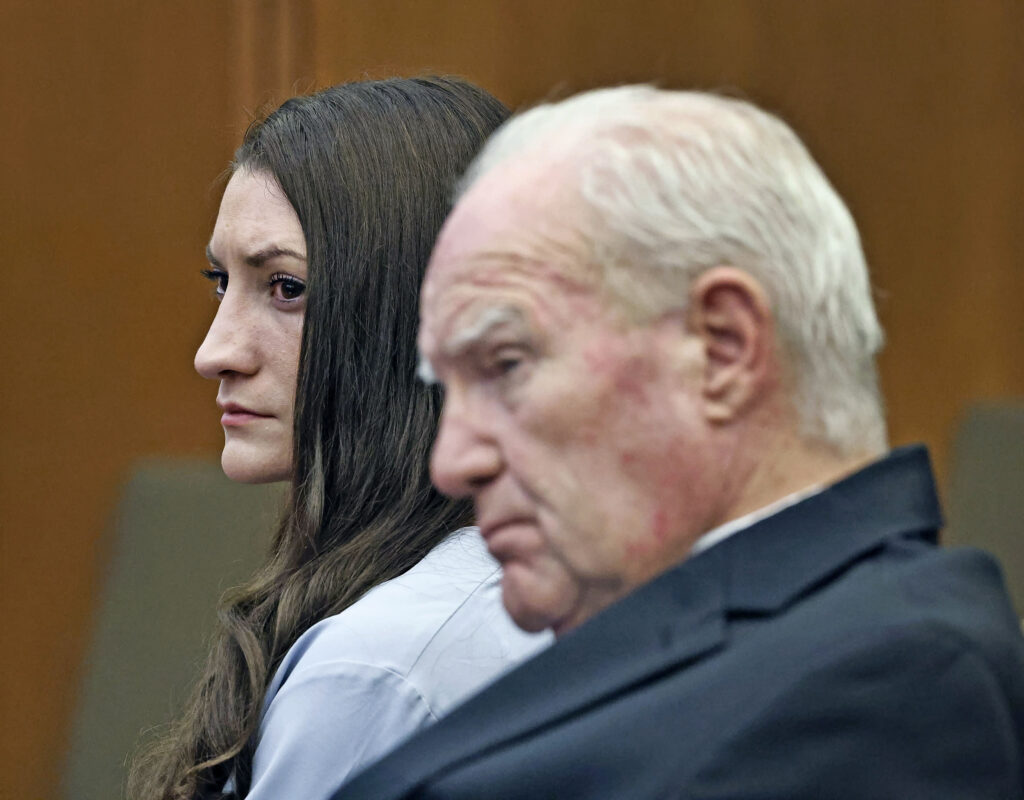
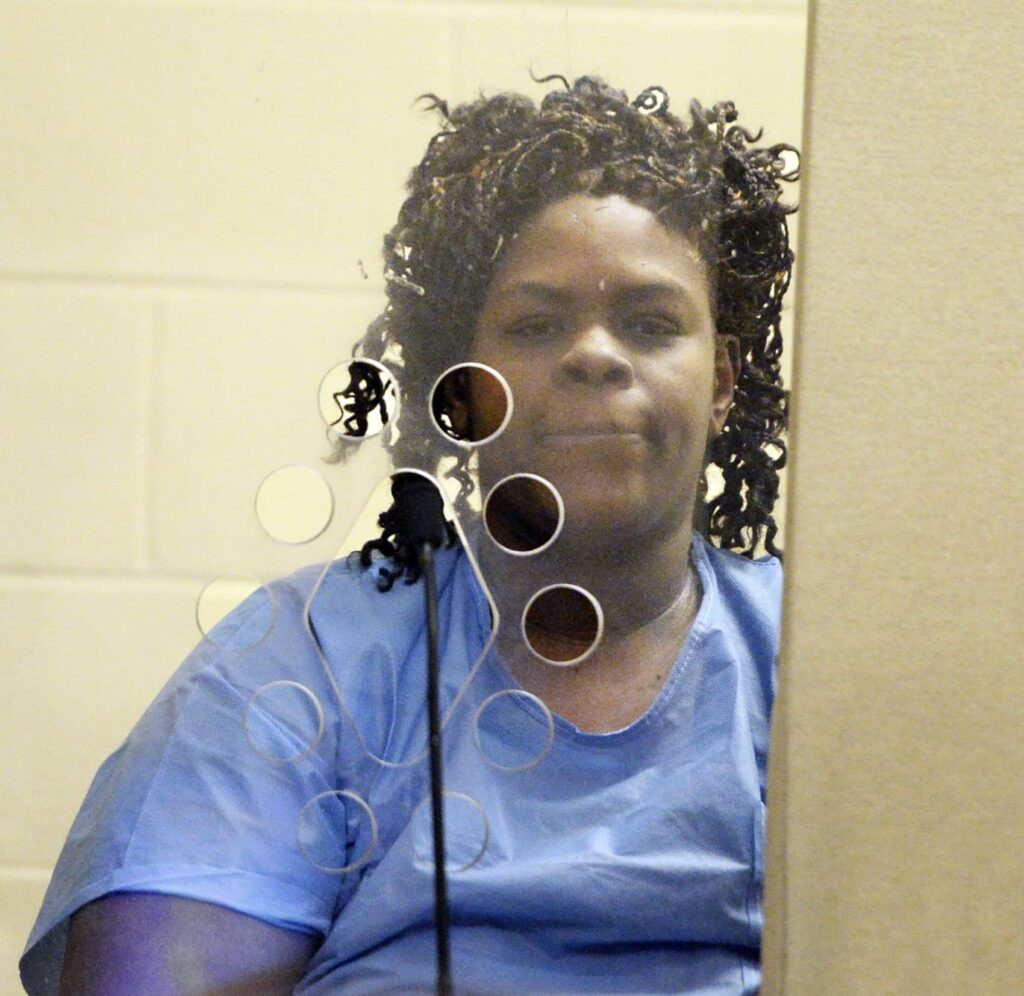
Defendant Lindsay Clancy watches jurors enter the courtroom during her murder trial on Friday, Sept. 4, 2026, in Plymouth, Mass. (Greg Derr/The Patriot Ledger via AP, Pool)
A dramatic, week-long jury deadlock culminated in a mistrial today for Massachusetts mother Lindsay Clancy. While mainstream headlines focus on the hung jury, explosive post-trial statements from the defense reveal the court was split 11-to-1 for total acquittal before a single juror triggered a total system collapse.
Why It Matters: The mistrial means Clancy—the former nurse who strangled her three young children during an alleged bout of severe postpartum psychosis—remains under indictment with an entirely uncertain legal future.
The 11-1 Drama: Late Thursday, a note from the jury foreperson exposed severe tension in the room. Eleven jurors accused a single male holdout of openly acknowledging reasonable doubt about Clancy’s criminal sanity but refusing to apply the legal standard to find her not guilty.
The 1-Hour Hail Mary: In an almost unheard-of legal maneuver this morning, defense attorney Kevin Reddington secured a temporary 1-hour stay from the judge. He launched an emergency appeal to the Massachusetts Supreme Judicial Court, begging them to investigate the holdout juror for “bad faith” refusal to follow instructions. The high court swiftly denied it.
Lindsay Clancy and attorney Kevin Reddington listen to the closing arguments. Greg Derr / Pool via The Patriot Ledger
“Robbed by One Man”: Outside the Plymouth courthouse, a furious Reddington claimed a legal victory despite the mistrial, stating, “We won the case, the prosecution was crushed. The other jurors were robbed by one man who stole seven weeks of their lives.”
Our PI’s Investigative Take:“This is the brutal reality of the American justice system,” notes Desiree, the licensed Private Investigator for 15 Minutes of Murder. “It takes months of state resources, over 80 witnesses, and weeks of testimony to build a case—but legally, it only takes one person with a personal agenda or an unshakeable bias to completely erase the entire process.”
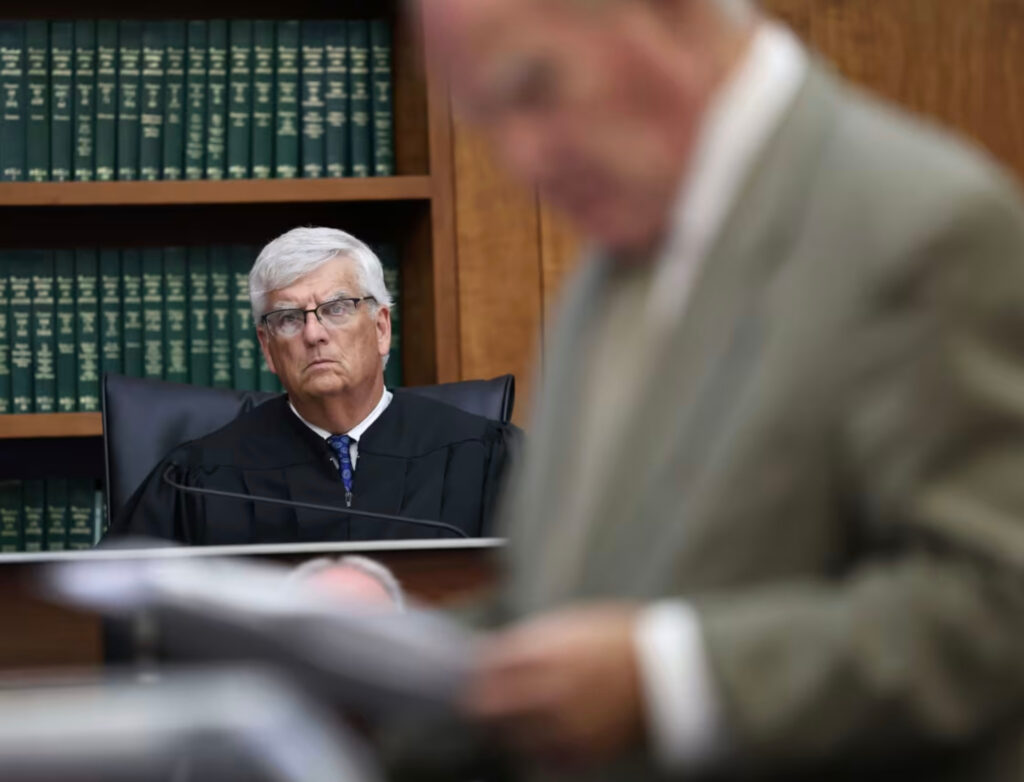
Judge William Sullivan listens to attorney Kevin Reddington. Greg Derr / Pool via The Patriot Ledger
Share Your Thoughts: Do you agree with the defense that an 11-1 split means the prosecution’s case was entirely crushed, or should prosecutors immediately announce a retrial? Let us know in the comments below.
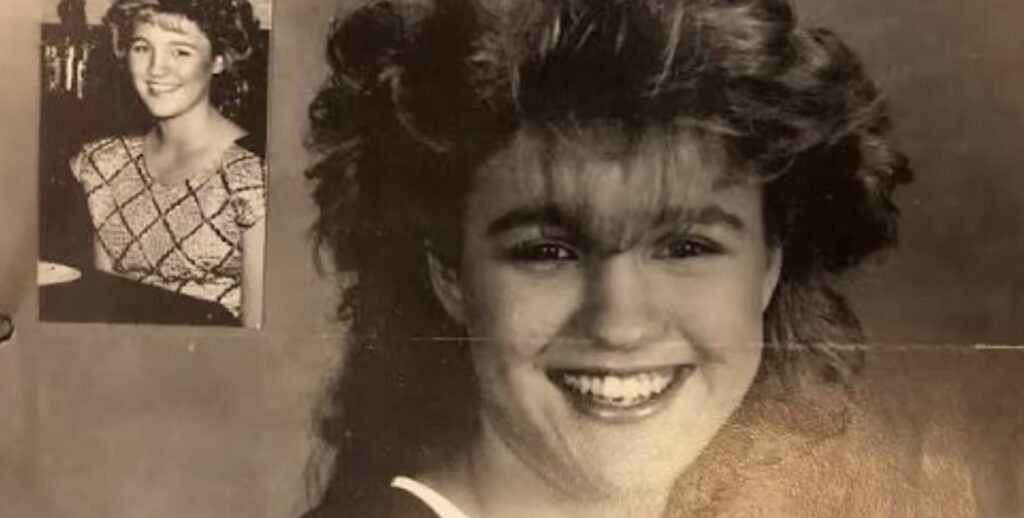
Jeanifer Weldon, 14, who was murdered in 1987. (Photo courtesy of the Polk County Sheriff’s Office)
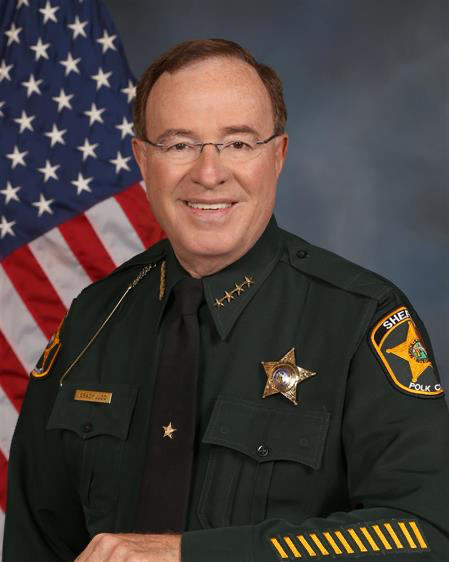
LAKELAND, FL — A chilling Central Florida cold case has reached its final resolution without a single strand of DNA evidence. Polk County Sheriff Grady Judd announced that the 1987 abduction and murder of 14-year-old Jeanifer Weldon has been officially closed.
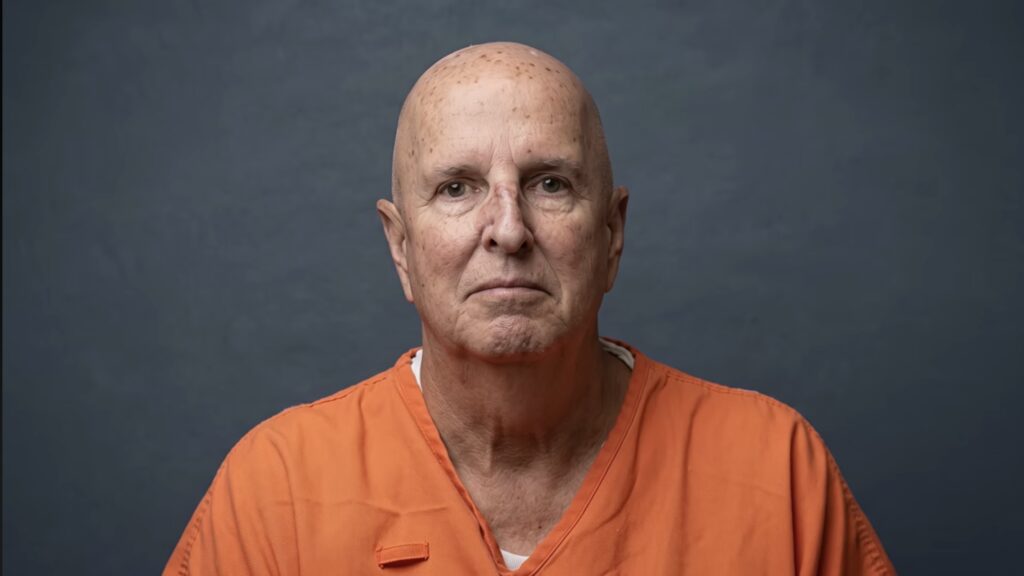
The perpetrator has been identified as former Mascotte police officer James Duckett, who was executed by lethal injection on July 28, 2026, for a separate, horrifying crime.
Why It Matters The breakthrough exposes a dark reality. Duckett spent decades on death row for the 1987 rape and murder of 11-year-old Teresa McAbee. Because Duckett was already facing execution, Polk County prosecutors historically withheld a second trial to avoid delaying ultimate justice. Following his execution, the Polk County Sheriff’s Office utilized a mountain of circumstantial evidence to “exceptionally clear” the file.
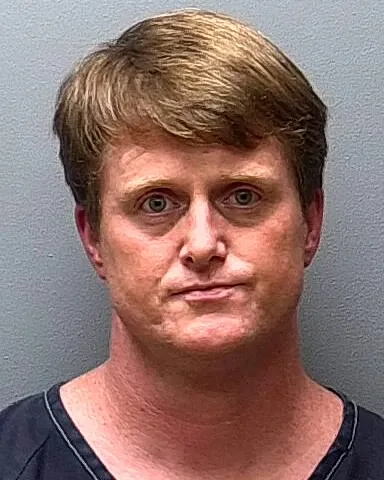
James Duckett booking photo. (Courtesy of the Florida Department of Corrections)
The Face of “Pure Evil”
Sheriff Grady Judd did not hold back, labeling the executed former cop as “pure evil in the flesh.” Judd stated that Duckett successfully took his darkest secrets to the grave until relentless police work forced the truth into the light.
The Evidence Convergence
Jeanifer Weldon vanished on September 19, 1987, while walking home from a friend’s house in Lakeland. While detectives repeatedly sent Jeanifer’s clothing to modern labs, no usable DNA was ever recovered. Instead, investigators pinned the crime on Duckett through an airtight timeline:
The Route: Duckett left for his night shift five hours early. He drove directly past Jeanifer’s walking route and arrived at work late, disheveled, and agitated.
The Gift: Hours before her death, Jeanifer bought a distinct stuffed kitten in a green shopping bag. The next morning, Duckett brought home an identical stuffed animal and green bag.
The Injuries: Duckett’s own wife later revealed to detectives that he returned home that night with deep scratches on his body.
Polk County Sheriff Grady Judd gave details of the resolution of the Jeanifer Weldon cold case. (Photo courtesy of the Polk County Sheriff’s Office)
The DNA Battleground
While Jeanifer’s case lacked physical forensics, DNA was the explosive focal point of Duckett’s final days. The Florida Supreme Court issued emergency stays of execution in early 2026 to allow advanced testing on a decades-old semen sample found on Teresa McAbee’s clothing.
Defense lawyers argued the results were entirely inconclusive. The courts ultimately denied further stays after state experts acknowledged the new results could not clear him, ruling the original circumstantial evidence remained ironclad.
Our PI’s Investigative Take “This case highlights exactly why the death penalty remains such a controversial issue,” notes Desiree, the licensed Private Investigator for 15 Minutes of Murder.
While DNA ultimately played no role in clearing Jeanifer’s case, Desiree emphasizes the high stakes of relying strictly on circumstantial timelines. “Nationwide, more than 200 death row inmates have been entirely exonerated (since the 1973), dozens of them by DNA evidence. When you consider that the U.S. averages roughly 20 executions a year, even a tiny margin of error means an innocent person could face wrongful execution under mistaken incarceration.”
Share Your Thoughts Does an exceptional closure following an execution bring true closure to a grieving family, or did this predator escape the full weight of individual accountability for Jeanifer? Let us know your thoughts in the comments below.
Go Deeper: Check out our Ask a PI series on our video tab or launch our YouTube Channel for deep-dive criminal defense insights from our team.
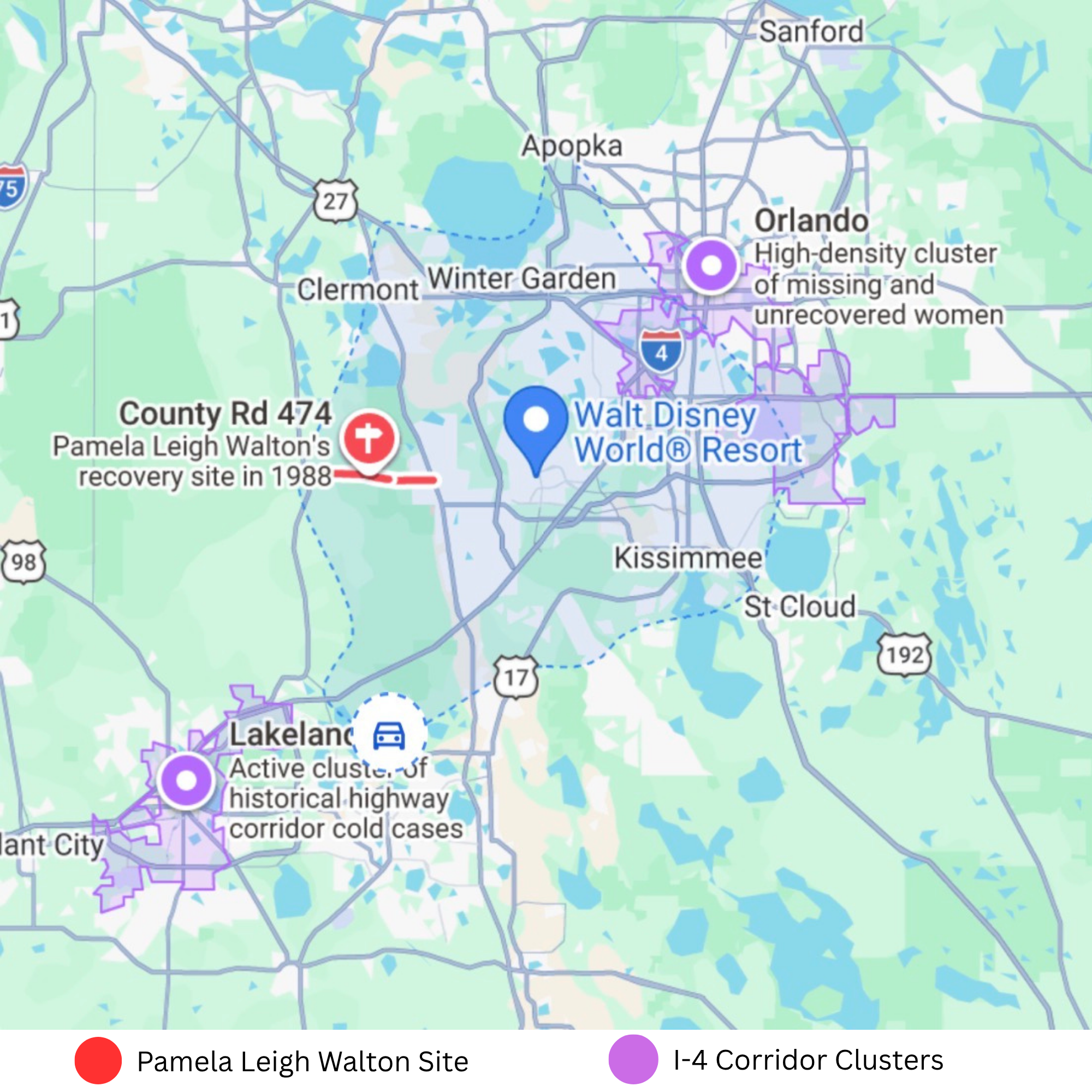
Map via Google Maps / Data compiled by 15 Minutes of Murder
Central Florida – Millions of travelers navigate Interstate 4 in Central Florida every single year, completely unaware of the dark investigative mysteries embedded along the shoulder. For nearly four decades, one of the corridor’s most haunting cold cases involved a homicide victim discovered in the brush off County Road 474 in Clermont, known to local detectives simply as “Julie Doe.”
The Discovery: A citizen searching for firewood stumbled upon hidden human remains in September 1988.
The Breakthrough: A dynamic 2025 genetic breakthrough finally restored her true identity as Pamela Leigh Walton.
The Scale: Pamela’s tragic story belongs to a much larger, chilling pattern of at least 19 other women who vanished or were found dead along this exact highway network.
The stark contrast between the vacation destination image of the I-4 corridor and the anonymity of its forgotten victims highlights the darkness hiding in places we pass in our every day lives.
The 37-Year Search for Pamela Leigh Walton
Photo: Lake County Sheriff’s Office
When Lake County investigators initially processed the 1988 crime scene, a series of early forensic misidentifications sent the homicide case down a decades-long dead end.
The timeline to justice required a complete rewriting of the case files:
The Biological Twist: In 2015, advanced genomic sequencing revealed “Julie Doe” was a transgender woman, completely shifting the parameters of active missing persons databases.
The Podcast Connection: The critical break came when a true-crime podcast listener opted into a law enforcement data-sharing box on a consumer DNA profile. This single digital click provided genealogists with the exact matching segment needed to build her family tree.
The Return Home: In March 2025, her name was officially restored. Pamela’s remains have since been repatriated from Florida to her native Kentucky.
The Shadow of the I-4 Corridor
While the identification of Pamela Leigh Walton marks a monumental victory for forensic genealogy, the criminal investigation into her death remains wide open.
More importantly, independent researchers note that her file is part of a broader, systemic highway anomaly. The I-4 corridor has long served as a high-density hunting ground for opportunistic predators—including long-haul trucker serial killers—who utilize the rapid transit lines and deep anonymity of the open road to evade local police tracking. At least 19 other families are still waiting for the exact same forensic closure that Pamela’s family received.
A Producer’s Ethical Blueprint
As a professional TV producer and the executive creator of 15 Minutes of Murder, I look at these highway tracking files through a structural storytelling lens.
“When you sit in a post-production studio analyzing a cold case, you realize your deepest ethical obligation is to strip away the anonymity surrounding these victims,” the 15MM Producer noted. “A highway shouldn’t be allowed to erase a human life. True-crime media has a responsibility to look past the tourist brochures, center the victims, and expose the broader regional patterns that allowed these predators to operate in plain sight. True justice requires a consistent, independent look into the darkness.”
Giving Back Their Real Life
Image via pamelaleighwalton.neocities.org (AI Generated via StarryAI)
While working on a story for 15 Minutes of Murder, our teams first goal is to give a person their real life back. The 15MM Producer notes, “A standard police case file only demands clinical numbers, biological metrics, and hard evidence. But our ultimate goal with After Dark is to look past the ink to give this person their real life back—to remember their closest friends, their favorite songs, their favorite foods, and all the normal, everyday things that truly defined them. When a tragedy like this occurs on the highway, a person gets lost in the darkness first, and then they get lost a second time when they are reduced to just an anonymous folder sitting in a cold filing cabinet.”
Tonight at 8:00 PM: 15 Minutes of Murder officially premieres its highly anticipated new series, 15 Minutes of Murder presents After Dark — The Corridor. Put on your headphones, turn the lights down, and join our team as we step directly into the forensic files and the deep haunting history of Florida’s I-4 corridor. Available on all official podcast channels.
Have Information? The homicide investigation into Pamela Leigh Walton’s death remains wide open. Anyone with tips regarding her time in Central Florida or Kentucky in 1988 is urged to contact the Lake County Sheriff’s Office Cold Case Team at 352-343-9529, or via email at ColdCase@lcso.org. Anonymous tips can also be submitted through Crimeline at 800-423-8477.
New York, NY – As the high-profile Lindsay Clancy murder trial shifts to intense defense testimony in Massachusetts, major corporate media outlets are shifting their monetization strategies to match public interest. This week, legacy publications announced highly publicized “live Q&A events” designed to let senior editors answer burning reader questions about the tragic 2023 Duxbury case files.
The Event: Corporate news teams launching temporary, interactive live commentary panels to capture peak trial traffic.
The Reality: Independent true-crime platforms have already been hosting weekly, deeply analytical live shows on these exact cases for months.
The Critique: This sudden shift highlights a glaring gap between transactional corporate reporting and genuine investigative community journalism.
Image of Press Gathered Outside Courthouse Image by Andy Leung from Pixabay
While legacy brands treat real-time legal tragedies like a scheduled television programming event, modern true-crime consumers are starting to demand a higher ethical standard of coverage.
Transactional Reporting vs. Consistent Analysis
Corporate news models are systematically built around the peak news cycle. They heavily flood resources into a local region when a courtroom scene turns dramatic, only to pull their coverage entirely the moment the verdict drops and search engine clicks begin to slow down.
From an editorial and production perspective, treating complex criminal trials like a one-off interactive panel presents an inherent challenge:
Surface-Level Pacing: To answer hundreds of rapid-fire reader questions in a single hour, corporate panels often reduce intricate legal precedents down to quick, oversimplified soundbites.
Missing the Context: Systemic warning signs—such as regional mental health system collapses or deep legal double standards—are easily glossed over in favor of chasing the most sensationalized courtroom updates of the day.
Image by Yildiray Yücel Kamanmaz from Pixabay
The Power of the Independent Voice
As a professional TV producer and the executive creator of 15 Minutes of Murder, I look at these corporate media patterns through an objective and structural narrative lens.
“When legacy outlets treat an active maternal mental health tragedy like a special, exclusive marketing event, it strips away the ongoing gravity of the issue,” the 15MM Producer noted. “Analyzing a homicide requires deep, unwavering consistency, not just a one-hour live chat window. Independent creators don’t wait for a trial to trend on social media to start talking about systemic failures. True journalistic integrity means staying in the trenches with the story, centering the victims, and creating a permanent, respectful space for deep dialogue long before the mainstream cameras arrive.”
True-crime audiences are no longer satisfied with corporate gatekeepers offering curated, brief glimpses behind the legal curtain. They want something more personal. True justice requires independent transparency, consistent analysis, and a refusal to treat human tragedy as transient entertainment.
Go Deeper: Check out our Ask a PI series on our video tab or launch our YouTube Channel for deep-dive criminal defense insights from our team.
An episode of 15 Minutes of Murder ‘Wednesday Night Live’
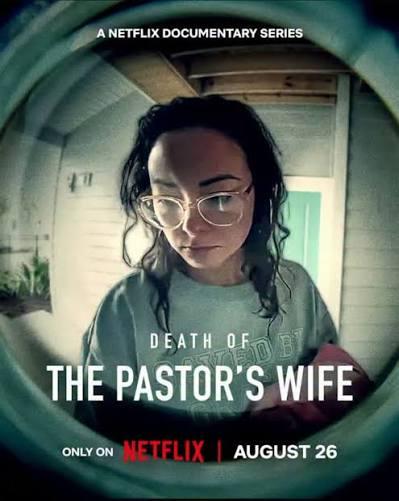
Myrtle Beach, SC – Netflix has officially announced the upcoming global release of a heavy-hitting, three-part true-crime docuseries tracking one of the most heavily discussed tragedies in recent internet history. Slated to premiere on August 26, 2026, Death of the Pastor’s Wife will dive deep into the life and sudden, controversial death of Mica Miller.
The Subject: Mica Miller, a vibrant resident of Myrtle Beach, South Carolina.
The Context: The estranged wife of local prominent pastor John-Paul Miller.
The Mystery: Her sudden death sparked a massive wave of online investigations and structural demands for accountability.
The series promises to feature never-before-seen footage and exclusive, firsthand accounts from Mica’s closest friends and family members speaking out on a major streaming platform for the first time.
Coercive Control Under the Spotlight
The announcement of Death of the Pastor’s Wife hits at a time when public frustration regarding domestic protection laws is at an all-time high.
Rather than focusing strictly on the final moments of Mica’s life, promotional materials confirm the docuseries will intensely focus on the months leading up to the tragedy. It will dissect deep, systemic allegations of extreme coercive control, intense emotional manipulation, and mental abuse.
For the true-crime community, the case became a turning point. It highlighted how difficult it is for victims of non-physical domestic abuse to find adequate legal protection from institutional systems, especially when powerful religious or community structures are involved.
Whenever a major streaming platform drops a trailer for a trending real-world case, it triggers massive search traffic. However, it also raises standard ethical concerns within independent journalism circles regarding how corporate networks pace these active family heartbreaks for corporate profit.
From an editorial and production perspective, turning an ongoing, painful search for answers into a binge-worthy “three-hour event” requires immense care. If a show heavily structures itself around suspenseful cliffhangers, the actual safety warnings and systemic failures can easily be overshadowed by dramatic network editing choices.
A Producer’s Ethical Blueprint
As a professional TV producer and the executive creator of 15 Minutes of Murder, I look at these upcoming network rollouts through a strictly analytical lens.
“When you are formatting a documentary series around a real-world suspicious death, your baseline responsibility is to protect the dignity of the victim,” the 15MM Producer noted. “The tragic loss of Mica Miller shouldn’t be framed like a fictional Hollywood mystery. The true value of a platform like Netflix stepping into an active story comes from exposing the patterns of psychological control that happen behind closed doors. Independent creators and major networks alike must ensure that true-crime media spends less time generating casual suspense, and more time honoring the victim’s voice while educating the public on how to identify coercive abuse before it turns fatal.”
Latarsha Sanders by Marc Vasconcellos /The Enterprise via AP, Pool
Massachusetts – The Massachusetts Supreme Judicial Court recently delivered a rare, unanimous ruling that shook the regional legal system, vacating the double-murder conviction of 51-year-old Latarsha Sanders.
The Sentence: Sentenced in 2022 to two consecutive life terms without parole.
The Crime: The 2018 stabbing deaths of her sons—Marlon, 8, and La’son, 5.
The Update: Sanders has officially been granted a brand-new trial.
The high court’s decision exposes an alarming procedural error regarding psychiatric history, bringing an ongoing conversation about systemic bias and criminal responsibility straight to the forefront of the true-crime community.
A Tale of Two Mothers in the Same Courtroom
The sudden reversal of the Sanders verdict does not exist in a vacuum. True-crime analysts are quickly drawing stark parallels between Sanders and Lindsay Clancy, the Massachusetts mother currently standing trial for the tragic 2023 strangulation deaths of her three young children.
The structural overlaps between the two cases are undeniable:
The Prosecution: Both women were prosecuted by the exact same District Attorney, Timothy Cruz.
The Court: Both cases fell under the jurisdiction of the exact same Superior Court Judge, William F. Sullivan.
courtesy photo
However, the legal strategies utilized in their respective courtrooms couldn’t have been more different. While Clancy’s well-documented battle with postpartum psychosis has remained a central, public focus of her high-profile defense, Sanders’s defense team faced a massive roadblock.
During her 2022 trial, Judge Sullivan completely barred the defense from introducing thousands of pages of post-arrest medical records that explicitly detailed her severe, undetected paranoid schizophrenia. The Supreme Judicial Court ruled this total exclusion a “prejudicial error,” stating that the jury was forced to deliberate without ever understanding the defendant’s true medical reality.
Unless You Have Lived It
This disparity highlights a deeper, societal failure in how the public and the legal system perceive acute maternal mental health crises. On a recent segment for 15 Minutes of Murder, true-crime expert Desiree broke down the dangerous disconnect in how communities minimize these devastating psychological breaks.
“Unless you have lived that, you have no idea how real something like postpartum depression or postpartum psychosis is,” Desiree observed. “And again you will try to reach out to your friends and family, and they will give you that same ‘Oh, you just need some rest,’ and you are really in the middle of a crisis! So that’s the first thing that I wanna say about that and that is from my personal experience.”
Treating a profound medical emergency as if it can be cured by a nap is wrong.
“When the people closest to a mother don’t understand the severe warning signs of a detachment from reality, the system completely collapses before help can arrive.”
Courtroom Sensationalism vs. Reality
When the tragedy originally occurred in Brockton back in 2018, the mainstream media and local prosecutors heavily leaned into sensationalized, panic-inducing headlines.
The Narrative: Initial trial presentations focused intensely on claims of a “ritualistic incident” involving Voodoo, transforming an untreated mental health crisis into a cinematic horror plot for the public.
The Closing Argument: The prosecution even used a closing argument comparing the tragedy to a fictional Law & Order episode—a move the high court also sharply criticized for lacking any actual evidentiary support.
Image by Sergei Tokmakov, Esq. Terms Law from Pixabay
A Producer’s Ethical Blueprint
As a professional TV producer and the executive creator of 15 Minutes of Murder, I look at these courtroom developments through a storytelling lens.
“When true-crime media or courtrooms resort to Hollywood television tropes like referencing Law & Order to explain a tragic loss of life, it strips away the gravity of the situation,” I noted. “A legal double standard shouldn’t dictate how we analyze a tragedy. Our deepest ethical obligation as investigative creators is to keep the focus firmly on the victims, Marlon and La’son. Centering the victims means demanding an objective, fair legal process that uncovers the actual systemic and medical failures that occurred long before a crisis turned fatal. True justice requires transparency, not sensationalism.”
Go Deeper: Check out our Ask a PI series on our video tab or launch our YouTube Channel for deep-dive criminal defense insights from our team.
Florida — With the arrival of the highly anticipated 11th season of Signs of a Psychopath on HBO Max and ID this week, true-crime audiences are once again turning their attention to the grim realities of the police interrogation room. The premiere episode, “I Guess I’m a Maniac,” hits incredibly close to home, following a cold-case homicide investigation led by Florida detectives after a woman was discovered strangled in a local wooded ditch. While the long-running series is already dominating streaming discussion boards, its intense formatting raises a critical question for modern consumers: Is independent media finally learning to respect the families left behind, or is streaming entertainment still struggling to center the actual victims?
Image courtesy of Investigation Discovery
The Voyeurism of the Interrogation Room
The commercial success of Signs of a Psychopath hinges on its direct, psychological analysis of a killer’s flat demeanor. By framing the episodes around forensic analysts flagging signs of narcissism or lack of remorse during a confession, the show inherently positions the perpetrator as the main character of the legal tragedy.
From an editorial and production perspective, allowing a killer’s words to dictate the narrative arc presents a major ethical challenge. When an episode focuses heavily on the shock value of a surprise confession, the systemic reality—the stolen lives of the victims, the enduring grief of regional communities, and the arduous path to justice—is often relegated to background details. The storytelling framework prioritizes analyzing a monster over honoring a life.
A Tale of Two Producers
In official promotional materials released on the network’s press site, executives emphasize the educational value of the psychological breakdowns, stating that the show’s goal is to “deconstruct the behavioral red flags of history’s most dangerous minds by analyzing raw, unfiltered interrogation footage to expose how they escape detection.”
But independent investigative creators argue that the true responsibility of a true-crime platform goes far deeper than simply airing a shocking confession reel. As professional TV producers and the creators of 15 Minutes of Murder, we look at these post-production editing decisions through a structural lens.
Photo: Manatee County Sheriff’s Office
“When you are sitting in an editing bay structuring a story about a homicide, your deepest ethical obligation is to the people who lost their lives,” says Craig Chapman, one of the 15 Minutes of Murder Producers. “An interrogation tape shouldn’t just be used to build dramatic suspense or dissect a psychological profile for entertainment. The real journalistic work comes from pulling the spotlight away from the killer’s voice and placing it firmly back on the victims. True-crime media needs to spend less time magnifying the ego of the perpetrator and more time honoring the humanity, names, and legacies of the people whose stories were abruptly cut short.”
Image by StockSnap from Pixabay
Go Deeper: Check out our Ask a PI series on our video tab or launch our YouTube Channel for deep-dive criminal defense insights from our team.